Naolima® Journal Baby furniture: How thoughtful design combines safety, development and sustainability
3. November 2025
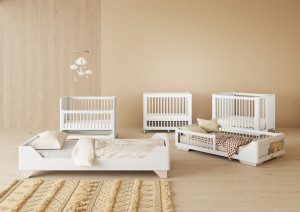
When a baby is on the way, not only does everyday life change, but so does the way you look at your own home. Suddenly, questions arise that previously played hardly any role: Where will my child sleep safely? Which materials are harmless? How do I design a space that offers security while also being practical? This is exactly where baby furniture comes into play—and in a way that goes far beyond purely functional aspects.
Why Baby Furniture Is More Than Just Furnishings
Baby furniture is the first environment in which a child consciously spends time. The crib is not just a place to sleep, but a place of calm and safety. The changing table becomes a daily meeting point between parents and child. Shelves, mattresses, and textile elements shape the feeling of the room, the atmosphere, and ultimately the child’s well-being. That is why it is worth taking a closer look when making a selection and not deciding solely based on design or price.
Modern parents today place great value on quality, sustainability, and durability. Disposable products are losing importance, while modular concepts, natural materials, and timeless design are increasingly coming into focus. High-quality baby furniture ideally grows with the child, can be converted or reused, and adapts to different stages of life. This not only saves money but also protects the environment.
At the same time, safety and health play a central role. Babies spend many hours a day sleeping or lying down. Materials free of harmful substances, stable constructions, and tested safety standards are therefore indispensable. Parents want to be able to rely on their child growing up in an environment that protects and supports them—without compromise.
This article aims to give you a comprehensive overview of the topic of baby furniture. You will learn what really matters when making a selection, which pieces of furniture are indispensable, and why modular, sustainable concepts—such as those pursued by Naolima—represent a sensible long-term solution for many families. The goal is to support you in making a decision that will stand the test not only today, but also in the years to come.
Safety in Baby Furniture
Safety is the most important criterion when selecting baby furniture. Babies are particularly sensitive, spend a lot of time lying down or sleeping, and have close contact with surfaces, materials, and textiles. Furniture for the very youngest should therefore meet significantly higher standards than conventional furnishings.
A central point is compliance with legal safety standards and regulations. High-quality baby furniture meets European safety guidelines, for example with regard to stability, resistance to tipping, spacing between slats, or load-bearing capacity. Especially with baby cribs, it is crucial that no pinch points arise and that distances are chosen so that neither the head nor limbs can become trapped. Rounded edges and solid workmanship are also essential to avoid injuries in everyday use.
Materials and Standards for Baby Furniture
Just as important are the materials used. Babies perceive their environment not only visually, but also through skin contact and their mouths. Paints, adhesives, or wood preservatives should therefore be free from harmful substances. Natural materials such as solid wood from sustainable forestry are preferred by many parents, as they are durable, stable, and comparatively low in emissions. Water-based paints or oiled surfaces are considered particularly safe and contribute to a healthy indoor climate.
Textiles and mattresses also deserve special attention. Breathable materials support a pleasant sleeping environment and help prevent overheating. Fabrics tested for harmful substances, ideally from certified organic cultivation, are an important factor for the child’s well-being. Especially in the first months of life, babies spend many hours in bed—quality pays off in the long run.
An often underestimated aspect is the durability and stability of baby furniture. Furniture that can only be used for a few months or quickly becomes unstable not only poses a safety risk, but is also ecologically problematic. Robust constructions and modular systems that can be converted significantly extend the period of use and ensure that furniture remains safe even when the child becomes more active and mobile.
Parent-friendly baby furniture therefore combines tested safety, high-quality materials, and thoughtful design. It gives parents the reassuring feeling of having created a safe environment in which their child can feel protected, secure, and free to develop.
Modern Baby Furniture: Why Modular Concepts Are Becoming Increasingly Important
The requirements for baby furniture have changed significantly in recent years. While in the past individual pieces were often purchased for short periods of use, many parents today want solutions that work in the long term. Modular baby furniture is an answer to exactly this need. It adapts to the child’s growth and accompanies families through several stages of development.
A classic example is the baby crib. In the first months, it serves as a protected sleeping place with high side walls. Later, it can become a more open bed, a bedside crib, or even a junior bed. Instead of buying several new pieces of furniture, modular systems can be converted or expanded. This not only saves money, but also reduces resource consumption—an important aspect for environmentally conscious families.
Modular baby furniture also offers flexibility in everyday life. Every family lives differently, rooms vary in size and use, and needs often change faster than expected. A piece of furniture that can be adapted gives parents the freedom to gradually develop their home without having to start from scratch again and again. This adaptability is a major advantage, especially in smaller apartments.
Another plus point is the emotional bond. Furniture that is used over many years becomes part of the family’s story. A baby crib that later turns into a child’s bed carries memories and gives the child a sense of continuity and security. This emotional component is often underestimated, but plays an important role for many parents.
For this reason, modern brands in the baby furniture sector are increasingly focusing on clean lines, timeless design, and durable materials. The focus is no longer on short-lived trends, but on furniture that blends harmoniously into different interior styles and still looks current even after years. This makes it easy to combine baby furniture with existing furnishings and later pass it on to younger siblings.
This is exactly where the philosophy of manufacturers who specialize in sustainability and modularity comes into play. Instead of offering isolated individual products, well-thought-out systems are created in which every element is sensibly coordinated with the others. Parents benefit from planning security, children from a stable and familiar environment.
Modular baby furniture thus stands for a more conscious use of resources, flexibility in everyday family life, and a long-term perspective that extends beyond the baby years.
The Baby Crib as the Heart of Modern Baby Furniture
The baby crib is usually the first major piece of furniture purchased specifically for a child. No other element of baby furniture is used so intensively or has such a direct influence on safety, sleep quality, and well-being. Babies spend a large part of their first months of life sleeping or resting, which is why the crib deserves special attention.
A good baby crib primarily offers security and protection. High, stable side walls or fall protection ensure that the baby feels safe and cannot fall out. At the same time, slats with correctly measured spacing allow for good air circulation and enable parents to keep an eye on their child at all times. This balance between openness and safety is a key quality feature of baby furniture.
Another important factor is adaptability to the child’s growth. In the first months, a high mattress base is sufficient, making it easier to place the baby in and lift them out. As the child grows older, the mattress base is lowered to ensure safety once the child begins to sit up or pull themselves up. High-quality baby cribs take these developmental stages into account from the outset.
Modern baby furniture, however, goes one step further. Instead of making the crib usable only for a short time, many models can be converted or expanded. A classic baby crib can thus become a bedside crib that stands directly next to the parents’ bed at night. This closeness makes breastfeeding easier, strengthens bonding, and gives both parents and child a sense of calm and security.
Later, the same bed can be transformed into an open child’s bed or a floor bed that meets the growing need for independence. The child can get in and out on their own while still feeling protected. This smooth transition is particularly valuable because it makes sleep transitions easier and provides the child with familiar structures.
In addition to functionality, design also plays an important role. Baby furniture should be calm, clear, and timeless in design. Overloaded shapes or bright colors can create restlessness in the sleeping area. Natural materials and a reduced aesthetic, on the other hand, support a relaxed atmosphere and can be easily combined over the long term.
The baby crib is therefore far more than just a place to sleep. It is a central place of arrival, development, and daily rituals. As the heart of modern baby furniture, it should combine safety, flexibility, and quality—and ideally remain a reliable companion for many years.

Mattresses and Textiles: Healthy Sleep as a Foundation
When it comes to baby furniture, much attention is often paid to the bed frame, while mattresses and textiles are seen more as accessories. Yet they play a crucial role in sleep quality and the healthy development of a baby. Especially in the first months of life, good sleep is not only about rest, but a fundamental prerequisite for growth, processing stimuli, and emotional stability.
A suitable baby mattress should above all be breathable and dimensionally stable. Babies cannot yet deliberately change their sleeping position, which makes it important for the mattress to provide sufficient support without being too soft. A firm but elastic surface helps keep the spine in a natural position and reduces the risk of poor posture. At the same time, good air circulation supports a pleasant sleeping environment and prevents heat buildup.
The material of the mattress is also decisive. Natural and tested-for-harmful-substances materials are preferred by many parents because they protect sensitive baby skin and promote a healthy indoor climate. Covers made of organic cotton or other natural fibers are breathable, skin-friendly, and usually easy to clean. Removable and washable covers are a major advantage in everyday life and contribute to hygiene.
Textiles such as bedding, bumpers, or fitted sheets should also be selected carefully. Less is often more here. A clear, reduced setup in the crib increases safety and ensures a calm sleeping environment. High-quality textiles complement baby furniture not only functionally, but also visually, by creating a harmonious and soothing atmosphere.
Another aspect is proper fit. Mattress and bed frame must be precisely matched. Gaps or inaccurate dimensions can pose a safety risk. For this reason, it makes sense to choose mattresses that are specifically designed for the respective baby crib. This ensures that all elements work together optimally.
In the long term, quality pays off here as well. A high-quality mattress can often be used over several years, for example when converting from a baby crib to a child’s bed. In modular baby furniture systems, this is a major advantage, as mattresses and textiles are designed from the outset for different phases of use.
Mattresses and textiles are therefore a central component of a holistic baby furniture concept. They have a direct influence on sleep, health, and well-being and should be selected with the same care as the furniture itself.
Montessori-Inspired Baby Furniture: Promoting Independence from the Very Beginning
More and more parents are interested in Montessori-inspired baby furniture because it is not only functional, but actively contributes to the child’s development. The basic idea of Montessori education is simple: children should be able to explore their environment independently—at their own pace and within a safe framework. Baby furniture plays a central role in this.
At the center is an environment that is child-friendly, accessible, and clear. Instead of designing furniture exclusively from an adult perspective, it is adapted to the child’s size, mobility, and perception. The goal is to open up small spaces for independence for the child as early as possible without overwhelming them.
A well-known example is floor-level beds or open bed constructions. They allow the child to get into bed and get up on their own as soon as they are motorically able to do so. This form of baby furniture supports a natural body awareness and promotes confidence in one’s own abilities. At the same time, the furniture remains designed in such a way that safety is guaranteed at all times.
Open shelves and low-positioned storage options are also part of this approach. When toys, books, or clothing are within the child’s reach, they can make decisions independently and take responsibility—whether while playing or getting dressed. Baby furniture thus becomes a tool for development, not just a furnishing item.
A calm, reduced design is important here. Montessori-inspired baby furniture deliberately avoids visual overstimulation. Clear shapes, natural materials, and muted colors help the child concentrate and better perceive their surroundings. At the same time, such furniture blends harmoniously into modern living spaces and remains timeless beyond the baby years.
Many modular systems adopt these principles without being dogmatic. They give parents the freedom to decide for themselves when and how much independence they want to allow their child. A baby crib can initially be used in a classic way and later converted into an open child’s bed. This creates a gentle transition that adapts to the child’s individual stage of development.
Montessori-inspired baby furniture is therefore not a rigid educational method, but a flexible approach that combines safety, freedom, and trust. It creates an environment in which children are allowed to grow—step by step and at their own rhythm.
Changing Table and Storage: Functionality in Everyday Life with a Baby
Alongside the baby crib, the changing table is one of the most frequently used pieces of baby furniture in everyday life. Several times a day, it becomes the central place for care, closeness, and short rest periods. All the more reason for it to be not only visually appealing, but above all functional, safe, and well thought out.
A high-quality changing table first and foremost offers stability and safety. The changing surface should be sufficiently large, have raised edges, and be at a comfortable working height. This protects the parents’ backs and allows relaxed, safe movements. Especially in the first months, when the baby is still carried a lot, an ergonomic height makes a big difference.
Another decisive factor is storage space. Diapers, wipes, clothing, care products, and towels should be stored within easy reach without cluttering the changing area. Drawers or open compartments help maintain order and structure everyday life. Well-organized baby furniture saves time, reduces stress, and ensures calm routines—an aspect that many parents only truly appreciate in daily life.
Modern changing tables are often designed to remain usable beyond the baby years. The changing attachment can be removed, turning the unit into a regular piece of furniture for the child’s room or bedroom. This multiple use is an important component of sustainable baby furniture and prevents furniture from having to be replaced after a short time.
Flexibility is also key when it comes to storage. Open shelves, modular elements, or combinable storage solutions can be adapted to changing needs. While care products are the focus at first, toys, books, or clothing are added later. Baby furniture that keeps up with this change significantly eases the transition between life stages.
Last but not least, design also plays a role here. Changing tables and storage furniture should blend harmoniously into the room and support a calm atmosphere. Natural materials and clean lines appear timeless and can be easily combined with other baby furniture. This creates a coherent overall look that is not only practical, but also contributes to a sense of well-being.
The changing table is therefore far more than a functional piece of furniture. It is a place of closeness, care, and daily routines—and a central element of a well-thought-out baby furniture setup.
Sustainability and Responsibility: Choosing Baby Furniture Consciously
Sustainability plays an increasingly important role for many families when selecting baby furniture. The birth of a child is often a turning point at which parents begin to question consumption habits and make more conscious decisions. Baby furniture offers a special opportunity here to take responsibility—for one’s own child and for the environment.
A central aspect of sustainable baby furniture is durability. Furniture that can only be used for a few months causes unnecessary resource consumption and waste. High-quality materials, stable constructions, and modular systems significantly extend the period of use. A piece of furniture that grows from baby age to toddler or even school age is not only ecologically sensible, but also economical.
Equally important is the origin of the materials. Wood from responsible forestry, low-emission surface treatments, and durable textiles help reduce environmental impact. At the same time, they create a healthy indoor climate from which babies in particular benefit. Sustainable baby furniture thus combines ecological responsibility with health benefits.
Another point is production. Short supply chains, transparent manufacturing processes, and fair working conditions are criteria that are becoming increasingly important to many parents. Furniture produced under clear quality and environmental standards builds trust and gives parents the confidence that they have made a good decision.
Sustainability is also reflected in design. Timeless baby furniture does not need to be replaced after a short time because it has “gone out of style.” Simple shapes and natural colors can be flexibly combined and adapt to different living styles. This keeps the furniture relevant for years and allows it to be easily passed on to siblings or resold.
Last but not least, sustainable consumption also means consciously reducing. Instead of purchasing many individual pieces of furniture, more and more families are opting for well-thought-out overall concepts. Baby furniture that combines multiple functions and can be converted supports this approach and provides greater clarity in everyday life.
Sustainable baby furniture is therefore more than a trend. It reflects an attitude that combines responsibility, quality, and future-oriented thinking—and creates an environment in which children can grow up healthy and consciously.

Combining Baby Furniture Correctly: Tips for a Harmonious Setup
Choosing individual pieces of baby furniture is important—but it is only the interaction of all elements that determines whether a baby’s room truly feels functional, calm, and harmonious. A well-thought-out combination makes everyday life easier, creates orientation, and supports the well-being of both child and parents alike.
A good starting point is reducing to the essentials. Especially in the baby’s room, the rule is: less is more. A high-quality baby crib, a functional changing table, and sensible storage space are completely sufficient in the first months. Too many pieces of furniture or decorations can quickly create restlessness and make flexible adjustments more difficult as needs change.
Clear zoning of the room is also important. Sleeping, changing, and playing areas should be visually and functionally separated, even if they are in the same room. The baby crib should ideally be placed in a quiet spot, away from windows or radiators. The changing table should be easily accessible and offer enough space to carry out care routines calmly. A small free area on the floor later becomes suitable for the first movement and play phases.
When combining baby furniture, the material concept also plays a major role. Consistent materials and color tones create calm and a cohesive overall look. Natural wood, soft textiles, and neutral colors are easy to combine and appear timeless. At the same time, individual accents—such as fabrics or pictures—can add warmth and personality without overloading the room.
Another important point is flexibility. Baby furniture should be arranged in such a way that it can be easily rearranged or expanded if needed. Modular furniture concepts are particularly practical here, as they can be adapted to new stages of development. What is a changing area today can become storage space or a play area tomorrow.
Lighting should also be chosen consciously. Soft, warm light supports a calm atmosphere, especially in the evening hours. A combination of indirect lighting and targeted light sources at the changing area has proven itself in everyday life.
Finally, it is worth viewing the baby’s room from the child’s perspective. At eye level, with accessible furniture and clear structures, an environment is created that conveys security and encourages curiosity. In this way, baby furniture becomes a harmonious overall concept that combines functionality and a feel-good atmosphere.
Conclusion: Baby Furniture as a Long-Term Investment in Family and Everyday Life
Baby furniture is far more than simple furnishings. It forms the foundation for safety, security, and a child-friendly environment. From the first sleeping phase in the baby crib to the changing table and storage space, as well as textiles and modular extensions, it shapes everyday life and the child’s development. Well-thought-out furniture makes family life easier, creates clear structures, and gives parents the reassuring feeling of offering their child a safe and stimulating space.
Modern, modular baby furniture in particular combines functionality, durability, and sustainability. It grows with the child, can be flexibly adapted to changing needs, and reduces resource consumption. This versatility makes it a worthwhile investment that lasts for years—ecologically sensible and economically smart.
Safety plays a central role here. High-quality materials, tested standards, and stable constructions ensure protection at all stages of development. At the same time, breathable mattresses, textiles tested for harmful substances, and ergonomic designs contribute to the baby’s well-being and healthy sleep. Parents can rely on the fact that their choice is not only practical, but also responsible.
Another advantage of well-thought-out baby furniture lies in its educational component. Montessori-inspired concepts promote independence, self-confidence, and freedom of movement from the very beginning. Children learn to move independently in their environment, make decisions, and understand structures—all within a safe framework. This creates a positive foundation for later developmental steps.
The design aspect should not be underestimated either. Timeless design, natural materials, and a harmonious color scheme create calm and aesthetics in the room. Parents benefit from a clearly structured, tidy environment that offers flexibility for individual adjustments. Baby furniture thus becomes a long-term companion that makes everyday life easier while creating a cozy atmosphere.
In summary, baby furniture is a long-term investment in the family: it combines safety, comfort, sustainability, and educational value. Anyone who carefully considers materials, modularity, and quality when making a selection creates an environment in which children can grow up healthy, secure, and confident—and parents can organize everyday life in a relaxed and safe way.
With a conscious selection of baby furniture, such as that offered by us, parents invest not only in today, but also in their children’s future and in a more sustainable, stress-free family life.
Which baby furniture is really necessary?
For the first months, a baby crib, a changing table, and sufficient storage space for clothing and care products are usually sufficient. In addition, textiles such as mattresses, fitted sheets, and breathable covers can provide comfort. Modular furniture offers long-term flexibility.
What should I pay attention to when choosing baby furniture?
Safety, freedom from harmful substances, durability, and functionality are crucial. High-quality materials, tested safety standards, rounded edges, and stable constructions are particularly important. It is also worth opting for modular systems that grow with the child.
Which mattresses and textiles are suitable for the baby crib?
Breathable, dimensionally stable mattresses made from natural materials tested for harmful substances are ideal. Covers made of organic cotton or other skin-friendly fabrics ensure hygiene and a pleasant sleeping environment. Fitted sheets should fit precisely to avoid safety risks.
What does Montessori-inspired baby furniture mean?
Montessori-inspired furniture is designed to be child-friendly and promotes independence. This includes floor-level beds, low shelves, and accessible storage solutions. Children can independently explore their environment while safety and structure are maintained.
How can baby furniture be used sustainably?
Sustainable baby furniture is made from durable, natural materials and often offers modular functions. Beds and dressers can usually be converted or adapted, allowing them to be used for many years. Timeless design and robust workmanship ensure that furniture can also be reused for siblings or later on.
Where can I buy Naolima baby furniture?
You can try and purchase our products from selected retailers in Germany, Austria, or the Netherlands—for example in Frankfurt, Düsseldorf, Munich, Berlin, Vienna, or Münster. Our local partners will advise you individually and help you find the perfect model.