Naolima® Journal Designer changing table: Style meets functionality in the nursery
10. November 2025
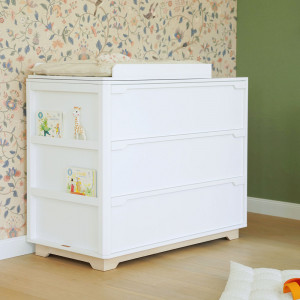
Furnishing a baby’s room is an exciting task for expectant parents. Alongside the baby bed, mattress, and storage, one piece of furniture moves particularly into focus: the changing table. A design changing table, however, is far more than a functional place for changing diapers. It combines aesthetics, ergonomics, and everyday practicality and becomes a central place for care, closeness, and daily rituals.
Why a Design Changing Table Is More Than Just a Piece of Furniture
Parents spend several hours a day at the changing table during the first months. A well-designed changing table not only makes the work physically easier but also contributes to a calm, organized environment. Ergonomic heights, rounded edges, and a stable construction reduce back pain and accidents, while sufficient storage keeps everything you need within easy reach.
In addition, design plays a major role. At a time when baby rooms are often harmoniously integrated into the overall living style, the changing table should not only be practical but also visually appealing. Natural materials, clean lines, and timeless colors create a pleasant atmosphere and can be combined with other pieces of furniture over the long term.
This article provides a comprehensive overview of the design changing table. You will learn what really matters when it comes to selection, materials, ergonomics, and sustainability, which functions make sense, and how the changing table can be optimally integrated into the baby’s room. The goal is to help parents find a thoughtful, stylish, and long-term solution.
Safety and Ergonomics: The Foundation of Every Design Changing Table
A design changing table must first and foremost be safe and stable. Babies are mobile, unpredictable, and need protection around the clock. The changing surface should therefore be sufficiently large and equipped with raised edges to prevent falls. High-quality materials and solid constructions ensure that the changing table remains stable even with daily use.
Ergonomics is another key aspect. Many parents underestimate how much strain baby care places on the back and shoulders. A design changing table with the right height allows relaxed work without constant bending or stretching. Some models even offer adjustable heights so they can be optimally adapted to the parents’ body size.
In addition to stability and ergonomics, material quality plays a decisive role. Wood from sustainable forestry, low-emission surfaces, and tested finishes ensure safety and a healthy environment. Textiles such as removable changing pads should also be free of harmful substances and easy to clean.
Practical safety features are also beneficial. Non-slip feet, securely attached changing tops, and reinforced drawer mechanisms help prevent accidents. The arrangement of handles and storage also affects safety: everything needed during diaper changes should be within reach so parents do not have to leave their child unattended.
A design changing table therefore combines safety, ergonomics, and everyday usability. It creates an environment that supports parents, allows them to act calmly, and consistently places the baby’s well-being at the center.

Functionality and Storage: Everything Organized and Within Reach
Alongside safety, functionality is the heart of every design changing table. Parents need quick access to diapers, wipes, care products, clothing, and other essentials. For this reason, the changing table should offer sufficient storage in the form of drawers, shelves, or compartments.
A well-thought-out storage concept reduces stress in everyday life and makes baby care easier. Open compartments allow quick access, while closed drawers create order and support a calm appearance. Many modern models combine both, meeting both aesthetic and functional requirements.
Flexibility is also a key factor. A design changing table should adapt to changing needs. Removable changing tops allow the table to be used even after the baby phase. It can later serve as a classic dresser for clothing or toys—an environmentally friendly solution that saves money and resources.
Modular accessories further simplify everyday life. Integrated diaper bins, removable boxes, or flexible drawer dividers ensure that everything has its place. Parents can customize the changing table to their needs and always keep an overview.
A design changing table thus combines practicality, organization, and aesthetics. It makes everyday life easier, creates a pleasant environment, and adapts to changes in the child’s room over many years.
Design Aspects: Stylish and Timeless Design of the Changing Table
A design changing table is not only functional but also a central element of interior design in the baby’s room. It should not only be practical but also visually appealing, timeless, and harmonious. Especially in open-plan living spaces or modern apartments, the changing table is often a visible piece of furniture that shapes the style of the entire room.
Form and lines play a central role. Clean, reduced lines convey calm and order, while rounded edges increase safety. A harmonious design ensures that the changing table does not look like a technical device but blends naturally into the overall look of the baby’s room.
Colors and surfaces also significantly influence the design. Natural wood tones appear warm and calming, while neutral colors such as white, gray, or beige are timeless and easy to combine with other furniture. Accent colors can be used selectively to add personal touches without overwhelming the overall look.
Material combinations are another design element. High-quality solid wood combined with metal handles, fabric boxes, or glass shelves can give the changing table a modern, elegant, or playful appearance. Thoughtful material combinations not only enhance aesthetics but often increase durability as well.
Finally, modularity is an important stylistic feature. A changing table with a removable top looks elegant and can later be used as a simple dresser. This supports its timeless character, as the furniture continues to fit well into living spaces or children’s rooms long after the baby phase.
A design changing table therefore combines functionality, safety, and aesthetics. It becomes an eye-catcher and at the same time a practical helper in everyday life, supporting parents and giving the baby’s room a stylish framework.

Materials and Craftsmanship: Quality That Convinces
When it comes to a design changing table, the choice of materials is crucial. Only high-quality materials guarantee stability, durability, and safety. Solid wood from sustainable forestry, low-emission finishes, or oiled surfaces are ideal, as they are harmless for babies and allow for long-term use.
Wood types such as beech, oak, or pine are commonly used. They are robust, durable, and easy to care for. Solid wood is also stable enough to withstand the load of changing pads, diapers, and care products over many years. MDF or plywood may be used as a supplement but should be certified as low in harmful substances.
Surfaces are not only visually relevant but also functional. Water-based finishes or oiled surfaces are easy to maintain, durable, and free of harmful substances. Textiles for changing pads should be removable, washable, and skin-friendly. Organic cotton or other natural fibers are particularly recommended.
Craftsmanship and details make the difference. Sturdy drawer runners, precise edges, secure fastenings, and non-slip feet increase everyday usability and safety. Careful workmanship ensures that the changing table lasts for many years, even with intensive use.
In summary, materials and craftsmanship form the foundation of a high-quality design changing table. They combine safety, durability, and aesthetics and make the piece of furniture a long-term companion in the child’s room.
Montessori-Inspired Approaches to the Design Changing Table
A design changing table can be more than just functional—it can also support a child’s independent development, inspired by Montessori education. Montessori emphasizes an environment that children can explore independently, and baby furniture plays a central role in this.
One approach is placing storage at eye level or within easy reach. Even if babies cannot access it themselves yet, toddlers can later use the dresser to retrieve or put away items independently. This promotes responsibility, self-confidence, and a sense of control over their environment.
Safety and stability remain top priorities. A Montessori-oriented changing table is sturdy enough to allow independent exploration without posing accident risks. Modularity further supports this, as removable tops allow the furniture to “grow” with the child.
Another advantage is the calm design. Clean lines, natural colors, and reduced forms help children concentrate and prevent visual overstimulation. At the same time, a well-designed changing table blends harmoniously into the room, even when additional Montessori furniture is introduced.
With Montessori inspiration, the changing table becomes more than just a care station: it becomes part of the child’s development, supporting independence and creating an environment where learning and play naturally come together.
Practical Everyday Tips: Using the Changing Table Optimally
Even the best design changing table is of little use if it is not well integrated into daily routines. A few tips help parents keep daily life stress-free:
- Keep everything within reach: Diapering products, clothing, and care items should be close at hand. Drawers, open compartments, and organizers make this easier.
- Change pads regularly: Removable, washable changing pads ensure hygiene and comfort.
- Use flexibility: Removable changing tops allow the dresser to be used even after the baby phase.
- Check safety regularly: Non-slip feet, stable fastenings, and regular checks for wear or loose parts increase safety.
- Organize by priority: Frequently used items in front, rarely used items in the back or above—this keeps the dresser tidy.

With these simple strategies, the design changing table becomes an efficient, safe, and pleasantly designed workstation that significantly eases everyday life.
Sustainability: A Long-Term Investment in the Family
Sustainability is a central aspect of design changing tables. High-quality materials, durable constructions, and modular functions significantly extend the product’s lifespan. A dresser that can be converted remains useful after the baby phase as a classic dresser or storage unit.
Materials such as solid wood, low-emission surfaces, and natural textiles not only contribute to durability but also create a healthy indoor climate. Parents can be confident that their child is being cared for in a safe environment.
Another advantage of sustainable furniture: fewer replacement purchases mean less waste and a more environmentally responsible decision. At the same time, parents save money in the long term and benefit from a well-thought-out, flexible piece of furniture.
Creating a Harmonious Baby Room: Tips for Combining with Other Furniture
The design changing table should be integrated into a cohesive overall concept for the baby’s room. A few points help with planning:
- Coordinate colors: Natural tones and neutral colors create a calm atmosphere.
- Define room zones: Sleeping, changing, and playing should be clearly separated.
- Maintain flexibility: Modular furniture can be rearranged later as needs change.
- Focus on safety: Clear walkways, non-slip floors, and securely fixed furniture help prevent accidents.
This way, the changing table becomes part of a harmonious, functional, and stylish room that supports both parents and child.

Conclusion: The Design Changing Table as a Long-Term Investment
A design changing table is far more than a functional table for diaper changes. It combines aesthetics, safety, ergonomics, and durability, making it a central element of a well-planned baby room.
High-quality materials, modular functions, and timeless design ensure that the dresser remains usable for many years—from infancy into toddlerhood. Ergonomic design protects parents and supports a stress-free daily routine, while ample storage ensures order and clarity.
Montessori-inspired elements and modular features encourage independence, responsibility, and playful exploration without compromising safety. At the same time, the choice of sustainable materials contributes to a healthy indoor climate and responsible consumption.
In summary, a design changing table is a long-term investment in functionality, style, and sustainability. It simplifies everyday life, enhances the baby’s room, and accompanies parents and children for many years. Those who make conscious choices regarding selection, quality, and ergonomics are making a decision that pays off in everyday usability, design, and future readiness.
What makes a changing table a “design” changing table?
A design changing table combines functionality with aesthetic appeal. It stands out through clean lines, timeless design, high-quality materials, and thoughtful ergonomics, making it both practical for daily use and stylish in the baby’s room.
What should I look for when choosing one?
Safety, stability, low-emission materials, and ergonomic height are essential. It is also worth choosing modular or convertible models that can later be used as a dresser or storage solution.
Which materials are particularly recommended?
Solid wood from sustainable forestry, low-emission finishes, or oiled surfaces are ideal. Textiles for changing pads should be removable, washable, and skin-friendly, such as organic cotton or other natural fibers.
Can a design changing table be used after the baby phase?
Yes. Many models are modular, and the changing top can be removed, allowing the dresser to be used later as a classic dresser, storage unit, or shelf. This keeps the investment valuable over the long term.
How can the changing table be optimally integrated into the baby’s room?
Colors, materials, and style should match the other furniture. A clear room layout is also important: changing, sleeping, and playing in separate areas. Ergonomic placement and sufficient freedom of movement increase safety and comfort.
Where can I buy a design changing table from Naolima?
Unfortunately, we do not currently offer a design changing table in our range. However, we do have several other great products that you can purchase from our selected retailers in Germany, Austria, or the Netherlands—such as in Frankfurt, Düsseldorf, Munich, Berlin, Vienna, or Münster.