Naolima® Journal Montessori Furniture – Child-Friendly Living That Promotes Independence
6. October 2025
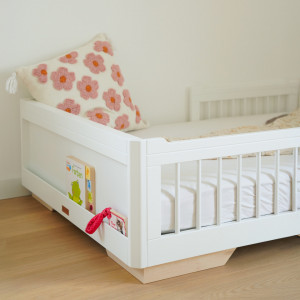
A child’s room is far more than just a place to sleep. It is a space for discovery, creativity, rest, and independence. This is exactly where Montessori furniture comes in: it is designed so that children can use their environment independently, learn through play, and at the same time experience a sense of security and comfort.
In this article, you’ll learn how Montessori furniture enriches a child’s room, which pieces are especially useful, and how to integrate them optimally into a space.
Why Montessori Furniture Matters
Montessori education, developed by the Italian physician and educator Maria Montessori, is based on the principle that children should explore the world independently and freely. In an environment that supports their natural curiosity, they learn to make decisions, take responsibility, and develop their abilities step by step.
Montessori furniture supports this approach: it is easily accessible, functional, and safe. Low shelves, reachable wardrobes, or beds close to the floor allow children to act independently—they can grab their books, choose their clothes, or tidy up their toys on their own. These self-directed actions strengthen confidence and independence, two central aspects of child development.
Quality and Sustainability – A Safe Foundation
When choosing children’s furniture, the quality of the materials plays a crucial role. High-quality Montessori furniture is made from natural, non-toxic materials, especially wood from responsible forestry. This ensures durability and a healthy indoor climate.
Robust construction, stable footing, and rounded edges are essential to guarantee safety. After all, furniture should support play, learning, and exploring—without parents needing to worry constantly.
Montessori Furniture and Functional Design
Good design in a child’s room combines function, safety, and aesthetics. Furniture that follows Montessori principles is intentionally simple, often in muted tones such as natural wood, white, or grey. This creates a calming atmosphere that doesn’t distract from what’s important and allows children to actively shape their surroundings.
Montessori furniture serves multiple purposes: it offers storage while teaching organization, clarity, and independence.
Whether it’s a Montessori bookshelf, a play sofa, or a floor bed—each piece is designed so that children can use it intuitively.
Basic Equipment for a Montessori Children’s Room
A well-designed Montessori room is divided into different functional areas: rest, play, learning, and storage. This gives children orientation and allows them to flourish in a structured yet flexible environment.
Beds
The bed is the heart of any child’s room. Montessori beds, especially floor beds, allow children to get in and out independently, promote a sense of security, and strengthen responsibility.
Tables and Chairs
A children’s table with matching chairs is a place for creativity, learning, and shared play. Children can draw, puzzle, craft, or read—everything at a height that supports their independence. Many such pieces are adjustable: height-adjustable tables and ergonomic chairs grow with the child and can be used into school age.
Storage Furniture
Wardrobes, shelves, and boxes help keep the room tidy. Montessori-oriented furniture allows children to maintain order independently: clothes, toys, or books are easily accessible and can be sorted freely. A Montessori wardrobe lets children select their clothes themselves—a key step toward independence.
Bookshelves
A Montessori bookshelf promotes a love of reading from the start. Books are displayed with the covers facing forward so children can immediately see their options. This supports decision-making and sparks curiosity. A small, rotating selection keeps things varied and exciting.

Play and Seating Furniture
Play sofas, small benches, or stools provide flexibility and comfort. Children can relax, play creatively, or sit with friends. Stability and child-safe construction are especially important here.
Montessori Furniture for Movement and Development
Children are naturally active and curious. Furniture that supports physical activity is therefore an important part of a Montessori room. Balance beams, wobble boards, or small indoor play elements promote balance, coordination, and muscle development. They also train concentration and body awareness, benefiting overall development.
These items are compact and flexible, easy to move around the home so children can satisfy their urge to move—even in small spaces.
Order and Structure in a Montessori Room
A central Montessori principle is order and clarity. Furniture like Montessori shelves, spacious boxes, or special storage systems helps children organize their toys and books independently.
Clear structure allows children to perceive their environment consciously and make decisions. This teaches responsibility early on and builds a sense of organization.
Design and Materials – Safety First
Montessori furniture should be made from high-quality, sustainable materials. Wood is especially popular because it is stable, durable, and natural. Soft colors like white, natural wood, or grey blend easily with other decor and create a calming effect.
Craftsmanship also matters: all edges should be rounded and smooth, screws and joints secure and stable. This lets children play, climb, and learn freely without constant parental supervision.
Montessori Furniture in Practice
The benefits of Montessori furniture become especially clear when children actively interact with their environment:
- They can make their own decisions—for example, which book to read or which clothes to wear.
- They develop a sense of order because everything has a clear place.
- Their motor skills and coordination are improved through playful furniture like balance beams.
- They learn to take responsibility for their toys and books.
Through this holistic support, children grow into confident, curious, and independent individuals.
Tips for Setting Up a Montessori Room
1. Create functional zones: areas for sleeping, playing, learning, and storage.
2. Choose child-height furniture: everything should be easy for children to reach.
3. Use a reduced color palette: simple colors promote calm and concentration.
4. Rotate regularly: switch out books and toys to create new stimuli.
5. Prioritize safety: stable furniture, rounded edges, and non-toxic materials.
With these tips, parents can create a child’s room that is not only visually appealing but also intentionally supports their child’s development.
Conclusion
Montessori furniture is more than just interior design—it is a tool that supports children in independence, creativity, and development. Through thoughtful design, child-friendly height, and clear structures, children learn to take responsibility, make decisions, and shape their environment actively.
Whether floor beds, Montessori wardrobes, play sofas, or bookshelves—every piece helps children feel safe, comfortable, and free. Parents also benefit: a well-structured room simplifies daily life, creates order, and offers a space where learning, playing, and resting harmoniously come together.
Montessori furniture can be used to create dream rooms that meet the needs of children of all ages—from babies to teenagers. It combines aesthetic design, high quality, and educational value, making it an ideal choice for parents who want to support their child’s development actively.
What exactly is Montessori furniture?
Montessori furniture is designed specifically for children and follows the principles of Montessori education. It is low, easily accessible, and functional, so children can use their environment independently—whether playing, learning, or tidying up.
From what age is Montessori furniture suitable?
Most Montessori furniture can be used from crawling age. Floor beds, low shelves, and storage systems are ideal for toddlers, while height-adjustable tables and chairs are suitable for preschool and primary school children.
What advantages does Montessori furniture offer for children?
Independence: Children can choose books, toys, or clothes on their own.
Sense of order: Everything has a fixed place, promoting responsibility and organization.
Creativity: Tables, shelves, and play sofas support free and playful learning.
Safety: Stable construction and child-friendly height ensure a safe environment.
What materials are recommended?
Natural wood from sustainable forestry is ideal. It is robust, durable, and non-toxic. Look for rounded edges and secure construction to prevent injuries.
What furniture pieces typically belong in a Montessori room?
Floor or house beds for independent entry and exit
Tables and chairs at child height
Low shelves and storage systems
Montessori bookshelves
Play and seating furniture like stools, benches, or play sofas
Optional: balance beams or small movement furniture
How many furniture pieces should a Montessori room contain?
Quality over quantity. Fewer, well-thought-out pieces create clarity and structure, making it easier for children to understand and use their environment independently.
Can Montessori furniture grow with the child?
Yes, many pieces are modular or height-adjustable, so they can accompany children from babyhood into school age. For example, tables, chairs, and beds can be adjusted to the child’s size.
Which Montessori furniture is available at Naolima?
At our selected retailers in Germany, Austria, and the Netherlands—such as in Frankfurt, Düsseldorf, Munich, Berlin, Vienna, or Münster—you will find Montessori floor beds, youth beds, wardrobes, and dressers.