Naolima® Journal Playpen for your baby – safety, freedom, and relaxed parenting moments
8. December 2025
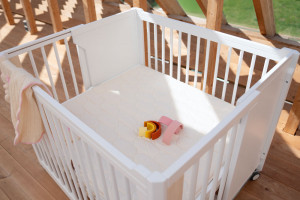
A baby changes everything – daily life, priorities, sleep rhythms. And suddenly a very practical question arises: Where is my child safe when I need my hands free for a moment? This is exactly where a baby playpen comes into play.
For some parents, it is an indispensable helper in everyday life. For others, it initially feels like a small “restriction.” But when used correctly, a playpen can not only provide safety but also be a wonderful place for playing, exploring, and feeling comfortable.
In this guide, you will learn everything you should know about baby playpens – from benefits and selection criteria to practical everyday tips.
Why a playpen for babies can be useful
As soon as babies become more mobile – first rolling, then scooting, then crawling – a new phase begins: curiosity without awareness of danger. Cables, stairs, pets, furniture edges – suddenly the entire home seems like an adventure park.
A playpen creates a clearly defined and safe area in which your baby can play protected. It prevents your child from coming into contact with dangerous objects or risky areas of the home.
At the same time, it creates a calm and manageable environment that encourages independent exploration and play. Babies can move freely there without you having to constantly intervene. For parents, this means valuable little breaks in everyday life. In this way, both your child and you benefit from greater safety and relaxation.
Important: A playpen does not replace supervision. But it provides a safe framework when, for example, you are briefly cooking, showering, or taking an important phone call.
From what age is a playpen useful?
Many parents ask themselves this question. In principle, a playpen is suitable from the moment your baby begins to move actively – usually between the 4th and 7th month.
Typical times for using a playpen are phases when your baby becomes noticeably more mobile. As soon as it independently rolls from its back onto its stomach, its range of movement expands significantly.
When it starts to scoot or crawl, it explores its environment more actively and quickly. At the latest, when it begins to pull itself up on furniture, the risk of small everyday accidents increases.
In these developmental phases, a playpen can be a useful support to combine safety and freedom of movement.
However, a playpen can also be used earlier – for example as a protected play area. The only important thing is that your baby has enough freedom of movement and does not stay in it permanently.
The advantages of a playpen in everyday life
A playpen offers many advantages in everyday life with a baby. It provides safety, structure, and small moments of relief during what is often a turbulent time.
Safety comes first

The most obvious advantage of a playpen is safety. A well-constructed playpen creates a protected area in which your baby can play safely. It prevents your child from reaching electrical outlets and putting itself in danger.
It also protects against pulling down heavy objects. Access to stairs or other dangerous areas is also reliably restricted. This significantly reduces the risk of accidents in everyday life.
At the same time, this gives you as a parent a reassuring feeling and greater peace of mind. Especially in open living concepts, this can be extremely relieving.
Promoting independence
What many people don’t know: A playpen can promote your baby’s independence. Within a protected space, many children feel safe enough to try new things. They roll over, test new movements, and engage independently with their toys.
In doing so, they train their motor skills almost automatically. Their ability to concentrate is also strengthened when they can focus calmly on one thing. At the same time, self-confidence grows as your baby realizes what it can already do on its own. The prerequisite, however, is that the playpen is experienced positively and not perceived as a “punishment corner.”
Structure in family life
Parents know: multitasking is part of everyday life. A playpen offers the opportunity for short, stress-free moments in which the baby is safely occupied. This allows you to prepare lunch in peace without constantly keeping an eye on your child.
Even emptying the washing machine becomes much more relaxed. At the same time, a sibling can be cared for without leaving the baby unattended.
Even a short moment to take a breath becomes possible. And it is precisely these small reliefs that make relaxed parents.
What types of playpens are there?
There are different types of playpens, which differ in material, size, and area of use. Each variant has its own advantages and is suitable for different living situations. This way, you can find the right playpen for every family, whether at home or on the go.
Classic wooden playpen

A classic wooden playpen impresses with stability and durability. Its timeless design blends harmoniously into many living spaces. The base is often height-adjustable, allowing it to be adapted to the baby’s needs.
Built to be particularly robust, it can withstand even the liveliest movements. Parents who value sustainability and natural materials especially appreciate this option. In this way, the wooden playpen ideally combines safety, comfort, and environmentally friendly design.
Foldable fabric playpen
A foldable fabric playpen is particularly light and mobile. This makes it easy to set up in different rooms. It is ideal for small apartments where space is limited.
It is also quick to set up and take down, which significantly simplifies everyday life. It is especially practical for flexible families or occasional use. In this way, it offers safety and comfort without taking up much space or effort.
Modular play yard
A modular play yard can be expanded and adapted to your family’s needs. It can be designed individually and set up flexibly.
At the same time, it can also serve as a practical room divider. This creates a defined play area without restricting the living space.
It is particularly suitable for larger apartments or houses. If a spacious play area is desired, this variant is the ideal solution.
Travel playpen
A travel playpen is compact, foldable, and easy to transport. This makes it perfect for vacations or visits to grandparents.
Many models even come with a practical carrying bag. This makes it easy to pack and take anywhere. For traveling, it is therefore a real relief for parents. At the same time, it ensures that the baby also has a safe play area away from home.
What should you look for when buying?
A playpen is an investment in safety and comfort for your baby and at the same time offers relief in everyday life. Several criteria play an important role in the selection so that it meets the needs of parents and child.
Pay attention to stability, high-quality materials, and sufficient space for your baby. Functions such as height adjustability or easy cleaning can also make use much easier.
Ventilation and visibility are equally important so that your child feels comfortable and you can keep an eye on them.
The right choice ensures that the playpen can be used for a long time. This makes it a practical and safe companion in everyday family life.
Stability
The playpen should never wobble or tip over in order to ensure maximum safety. Therefore, pay attention to solid connections between the individual parts. Non-slip feet also ensure that the playpen stands securely on the floor.
Even workmanship is also important so that no weak points arise. Only then can your baby play safely and move freely. A stable playpen also gives parents a reassuring feeling in everyday life.
Material quality
When buying a playpen, pay attention to materials free of harmful substances in order to protect your baby’s health. Rounded edges prevent injuries during play and exploration. Splinter-free wood ensures that your child does not get hurt on rough surfaces. Tear-resistant fabrics increase the durability and safety of the playpen.
Babies often explore their environment with their mouths and hands, so high-quality workmanship is particularly important. Only then can they play carefree while you can stand by with peace of mind. A high-quality playpen is therefore both safe and durable.
Size
A common mistake when buying a playpen is choosing a model that is too small. A playpen should offer enough space so that your baby can turn around.
Sufficient room for crawling and moving is equally important. Toys should also fit in easily without overcrowding the space.
The larger the play area, the more freedom your child has to develop. A spacious playpen makes playing more comfortable and safer. This allows your baby to explore the environment undisturbed and have fun.
Height adjustability
A height-adjustable base in the playpen is particularly practical, as it protects the parents’ backs in the first months when lifting and laying down the baby. Small children can be placed in or taken out comfortably.
Later, the base can be lowered as soon as your baby begins to pull itself up. This keeps the playpen safe even as the child becomes more mobile.
Parents continue to benefit from back-friendly handling. At the same time, the playpen grows with the baby’s abilities. This keeps it usable and functional for a longer period of time.
Ventilation & visibility
Babies always want to see their parents and feel safe. Transparent bars or mesh in the playpen ensure that sufficient air can circulate. At the same time, they allow constant eye contact between parents and child. This makes the baby feel secure even when playing alone.
It also reduces frustration and restlessness, as the child senses the parents’ presence. Good ventilation also ensures a pleasant climate inside the playpen. In this way, the play area becomes both safe and comfortable for your baby.

Is a playpen bad for development?
This concern is common among parents, but the short answer is: A playpen is harmless when used correctly.
It only becomes problematic if the baby remains in it for hours and has no opportunity to move freely on the floor. Using it as a permanent solution where the playpen constantly serves as a “playground” can also restrict the natural development of movement skills. Babies urgently need floor time to crawl freely, roll, and try out new movements. Only in this way can they optimally develop their motor skills, coordination, and independence.
The playpen should therefore be understood as a temporary safety zone – a protected place where the child can play while parents get a short break. A good guideline is to use it situationally: for short moments of calm or when direct supervision is briefly not possible. In this way, both your child and you benefit from safety, freedom, and relaxed use in everyday life.
How to make the playpen baby-friendly
An empty playpen initially looks uninviting and can quickly become boring. With just a few simple steps, however, it can be transformed into a cozy and appealing play area.
A soft base ensures comfort for rolling and crawling, while selected age-appropriate toys stimulate curiosity. Small highlights such as colorful rattles, grasping rings, or fabric books make the playpen an exciting place to explore.
Changing toys from time to time also keeps your baby interested in the long term. This turns the playpen into a safe and entertaining favorite spot for your child.
A soft base
A padded, breathable mat not only provides comfort but also safety during play. It protects your baby while rolling, crawling, and during the first attempts to stand up from hard floors.
At the same time, it offers a soft, cozy surface that invites longer stays.
Thanks to the breathable surface, the mat remains pleasantly tempered and prevents excessive sweating. This makes the playpen a safe and comfortable place where your child can play and explore undisturbed.
A good base is therefore an important part of an inviting play area.
Age-appropriate toys
When it comes to toys in the playpen, less is often more.
Two to three carefully selected toys are completely sufficient to keep your baby engaged.
Popular options include grasping rings, fabric books, rattles, or teething rings. They stimulate the senses, promote motor skills, and maintain the child’s interest.
Too many toys at once, on the other hand, can be overwhelming and cause restlessness. With a targeted selection, the play area remains clear and inviting. This allows your baby to explore calmly and have fun without being overstimulated.
Creating variety
Change the toys in the playpen regularly to provide new stimuli again and again. This keeps the play area exciting and interesting for your baby.
By changing toys, children discover different shapes, colors, and functions, which promotes their curiosity and willingness to learn. It also prevents the child from becoming bored or restless too quickly.
With varied toys, the playpen remains a place full of discovery and fun. In this way, independent play is promoted in the long term. A well-designed, varied play area therefore makes a significant contribution to your baby’s development.
Positive association
Do not suddenly place your baby in the playpen; instead, get them used to it gently. Stay nearby at first and play together so that they feel safe. This way, your child learns to associate the playpen with positive experiences.
Only when they have built trust should you gradually leave the space. This gentle introduction prevents frustration and separation anxiety. At the same time, it supports your baby’s independence in a protected environment. In this way, the playpen becomes a place where your child enjoys playing and feels comfortable.
Playpen in the living room – can it be stylish?
Absolutely! Modern playpens are no longer bulky, unwieldy pieces of furniture but can be elegantly integrated into the living environment.
Models made of wood or in neutral colors in particular blend harmoniously into different interior styles and do not appear disruptive. To create a stylish setup, you should choose colors and materials that match the rest of your interior so that the playpen feels like a natural part of the room.
Ideally, place the playpen near a window so your baby can enjoy light and a view, but make sure there is no direct draft.
A subtle, padded play mat not only provides comfort but also makes the area visually more appealing.
It is also worth keeping the play area tidy and providing only selected toys so that it remains inviting and organized.
With these simple measures, the playpen becomes a functional and aesthetic part of your home – a place where your baby enjoys playing and feels comfortable without the room appearing cluttered or overloaded.
How long is a playpen used?
Most families use a playpen between about 6 months and 18 to 24 months. During this phase, babies become increasingly mobile, begin to crawl, pull themselves up, and actively explore their environment.
As soon as children can walk safely and understand what “no” means, the playpen is usually needed less often.
Some children lose interest earlier and prefer free movement on the floor. Others, on the other hand, feel comfortable in it for a longer period and enjoy the protected play area.
In this way, the use of the playpen adapts flexibly to the development and preferences of each child. Parents can shape the duration individually, depending on how their baby copes with it and how much freedom of movement it needs.
Alternatives to the playpen
If you are unsure whether a playpen is the right choice for your family, there are some alternatives. A safety gate can section off certain areas of the home and thus provide safety.
It is also possible to childproof the entire home by securing potentially dangerous areas.
A separated play area with protective mats also offers your baby a safe space for playing and exploring.
These solutions can work well in some situations but often require more effort and supervision.
Especially in households with multiple children or pets, however, the playpen proves to be a particularly practical and uncomplicated solution. It offers a clearly defined, safe area in which your child can play undisturbed.
Our conclusion: Playpen for your baby – a helpful companion in everyday family life
A playpen is not a must – but for many families, it is a real support.
It provides safety, structure, and small breathing breaks. At the same time, it can be a place for independent exploration when it is designed with care and used consciously.
In the end, the following applies: Every family is different. What matters is that you find a solution that feels right for you.
Parenthood is a journey full of small decisions. A playpen is just one of them – but perhaps exactly the one that makes your everyday life a little more relaxed.
My baby cries in the playpen – what should I do?
It is often a matter of habit. Start with short periods and stay in the room at first. A positive atmosphere is important.
From what age can a playpen be used?
A playpen is suitable from the moment your baby begins to move actively – usually between the 4th and 7th month. As soon as it scoots, crawls, or pulls itself up, a safe, defined area becomes useful.
How long can my baby stay in the playpen?
There is no fixed time limit. A good guideline is to use the playpen situationally – for short moments when you need your hands free. Your baby should still have enough free movement time outside of it.
Can a playpen affect my baby’s development?
No, as long as it is used correctly. It only becomes problematic if your baby stays in it for hours and has no opportunity to explore the floor freely. As a temporary safety zone, however, it supports independence and playful discovery.
What accessories make a playpen particularly inviting?
A soft, padded mat provides comfort, while selected toys such as grasping rings, fabric books, or rattles stimulate the senses. Less is more: two to three toys are enough to avoid overstimulation.
Are there alternatives to a playpen?
Yes, for example safety gates, full home childproofing, or separated play areas with protective mats. However, especially in households with multiple children or pets, the playpen often remains the most practical and safest solution.
Where can I buy a playpen from Naolima?
Unfortunately, we do not offer a playpen. However, we do have a baby bed that can be converted into a playpen. You can purchase this and our other products from selective retailers in Germany, Austria, or the Netherlands – for example in Frankfurt, Düsseldorf, Munich, Berlin, Vienna, or Münster. Our local partners will advise you individually and help you find the perfect model.